
What gives it its colour?
Matcha is made from shade-grown green tea leaves, ground into a fine green powder.


A LITTLE MATCHA KNOW-HOW.
Matcha is finely ground green tea. Unlike a tea bag, the powder is whisked into your drink rather than steeped and removed.
New to matcha? Start with the basics below, then choose a tin and make your first cup.
Matcha is made from shade-grown green tea leaves, ground into a fine green powder.
Whisk with a small splash of warm water first. Add more water or milk, and enjoy it hot or iced.
Choose by taste and how you make your cup: traditional matcha, milky lattes or a flavour twist.
Matcha is closely associated with Japanese tea culture and ceremony. Today, it is also part of everyday cups, café lattes and kitchen experiments. You can enjoy the craft without making it complicated.
MATCHA 101 / A LITTLE HISTORY
From the bowls of China to the tea rooms of Japan. Follow a little leaf through centuries of craft, culture and everyday rituals.
Follow the story
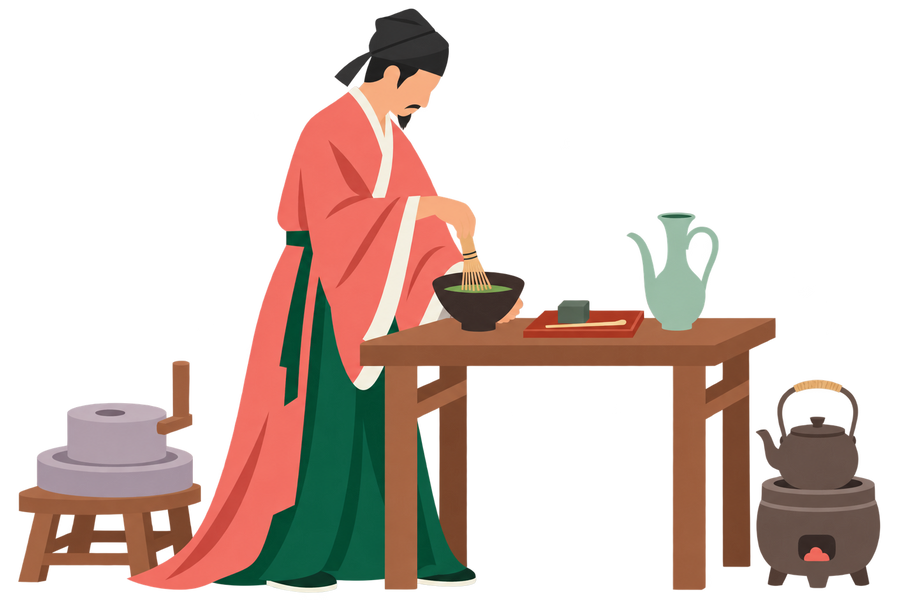
01 / CHINA · SONG DYNASTY, 960–1279
In Song-era China, tea was ground into powder and whisked with hot water. Powdered tea, a whisk and a dark bowl: the beginning of this part of the story.


02 / JAPAN · 1191
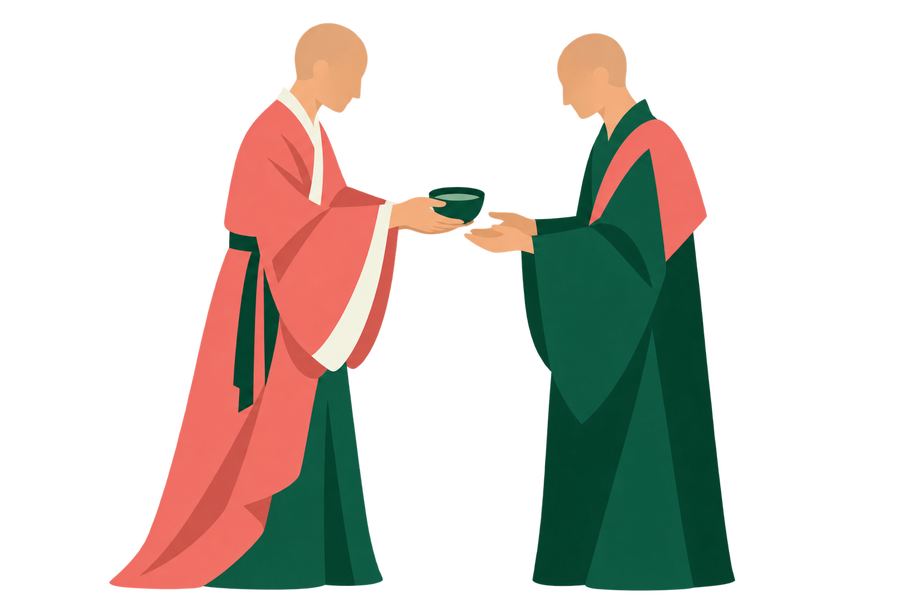
The Buddhist monk Eisai returned from China in 1191, helping spread tea seeds and powdered-tea practice in Japan. Tea itself had reached Japan centuries earlier.

03 / JAPAN · THE 1200s
In Zen monasteries, tea accompanied meditation and daily rituals. Preparing and sharing a bowl became part of a practice of attention.

04 / JAPAN · 1300s–1400s
Samurai joined tea gatherings, collected treasured bowls and competed to identify different teas. Over time, the tea room also became a place for considered hospitality.

05 / JAPAN · 1400s–1500s
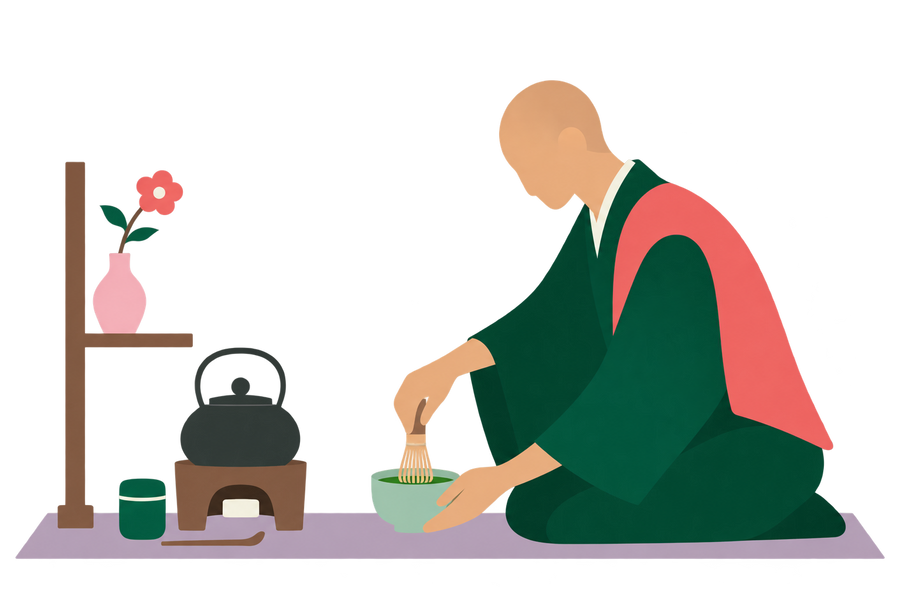
Tea masters including Murata Shukō, Takeno Jōō and Sen no Rikyū helped shape a quieter way of tea: care for the guest, simple utensils and a considered setting.
06 / THE CRAFT · THEN & NOW
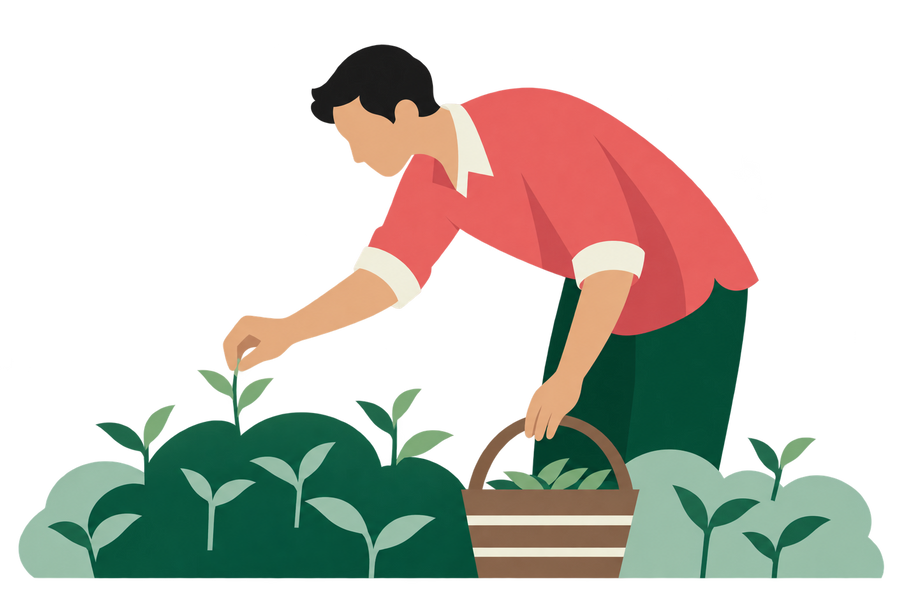
Today's matcha starts with shade-grown leaves. They are steamed, dried and refined into tencha, then milled into powder. A small scoop carries a great deal of work.

07 / AROUND THE WORLD · TODAY
Matcha now finds its way into cafés, kitchens, iced lattes and sweet things. The traditional bowl remains a living practice alongside these newer ways to enjoy it.

08 / YOUR CUP · YOUR CALL
A whisked bowl. A milky latte. A moment shared. However you drink yours, there is room for a little matcha ritual in your day.
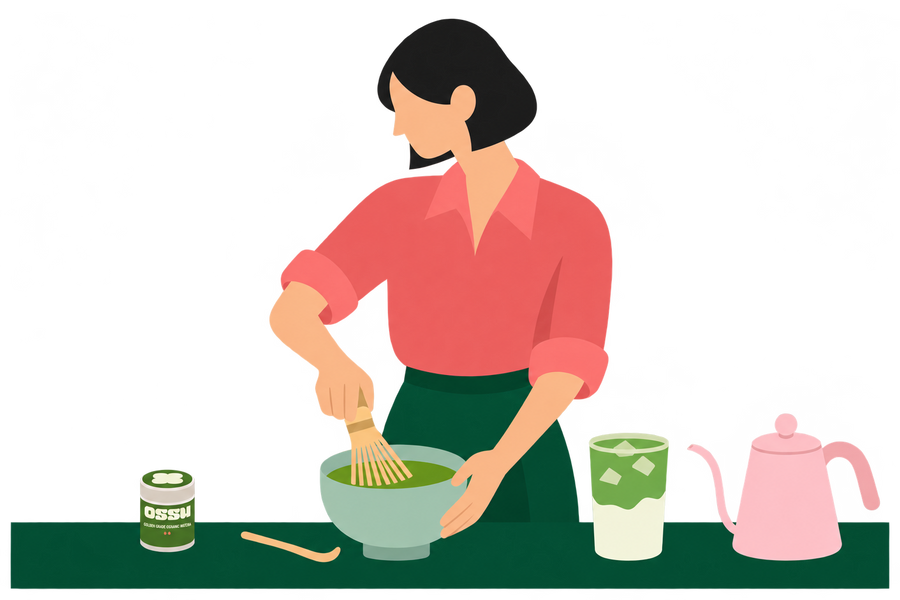

THE LEAF LED US HERE. YOUR NEXT RITUAL.
Start with how you like to drink it. Discover three traditional grades and four flavour blends, and find your kind of cup.
Find your matchaFinely ground green tea, whisked into your drink rather than steeped and removed. A small scoop, a beautifully green cup.
Meet the gradesWhisk with a small splash of warm water first. Then add water or milk. Hot or iced, make a little time for your kind of cup.
Show me howKeep your bowl simple, make a milky latte or try something new. There is more than one way to enjoy matcha.
Try an OSSU recipeA short illustrated introduction, rather than a complete history. The scenes are artistic interpretations, not portraits or reconstructions of specific events. Tea reached Japan before Eisai's return in 1191; tea ceremony remains a living practice today. The craft chapter describes modern production, rather than one dated invention.
Urasenke: the way of teaTokyo National Museum: tea & samuraiThe Met: a Song tea bowlNational Palace Museum: Song tea preparationJapan Matcha Association

Certified by Organic Farmers & Growers · GB-ORG-02.
OSSU Tea Limited · Registration UKP1863.

Your cart is currently empty.


